
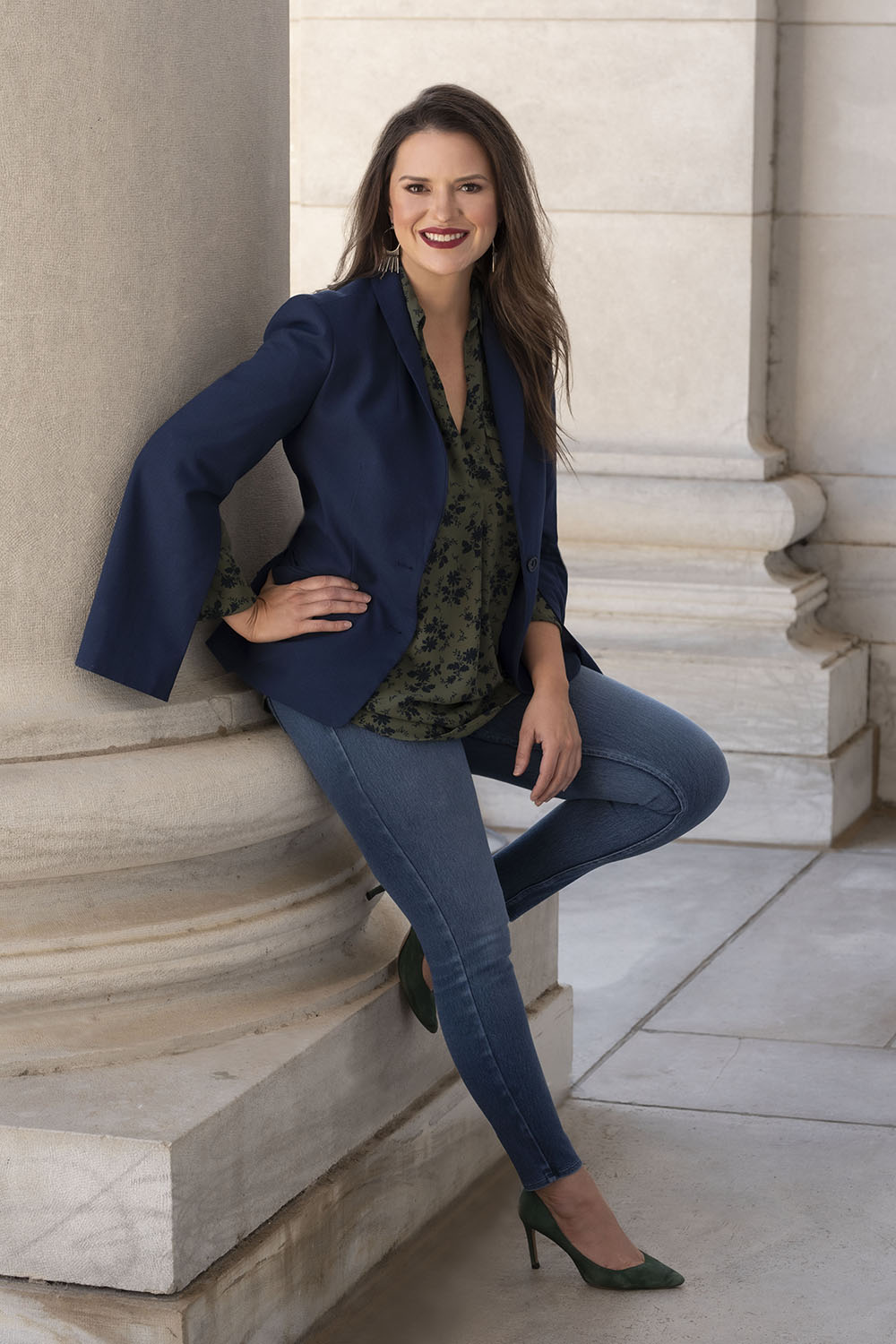
CEO, Holman Strategies

WHAT’S YOUR SECRET TO SUCCESS?
My mother always told me when I was afraid of trying something, “Go for it because you’re sitting on no, right now!” Basically, this means be brave, go for your dreams and have faith in your ability to accomplish them. You can always find a way; the worst thing that could happen is you fail and learn something. If you don’t try, you will certainly not succeed.
WHAT ATTRACTED YOU TO YOUR CAREER?
I became interested in politics and government at a young age. We had been discussing “making a difference” in my second-grade class. That evening, my parents were discussing the 1992 presidential election. They told me how much government plays a role in the daily lives of people. My thought was, “Wow, government touches everything! That is a good way to make a difference!” My dream of working in government has been with me ever since.
HOW DID YOU GET STARTED IN YOUR FIELD?
I had amazing mentors in college and early in my career. Beth Wilson Gray, a professor at Arkansas Tech University’s Emergency Administration and Management (EAM) Program, was my first major mentor in my career. She took my love of politics and helped me mold it into a career in emergency management. I took the experience I cultivated in college and got on a flight to Washington, D.C., in January of 2009. That February, I packed up my little Pontiac Sunfire and moved to D.C. for an internship with Witt Associates, now Witt O’Brien’s. A few months later, I was hired full-time.
WHAT DO YOU LOVE BEST ABOUT WHAT YOU DO?
Bridging the gap between legislation, policy and the real world. When I’m engaging with federal policy and lawmakers on critical issues that impact our nation’s resilience to hazards, I’m in my element. I love talking with them to help them understand what state and local governments need to strengthen their community’s resilience to natural and man-made hazards. I love helping decision makers in Washington connect to local first responders, state and local elected officials, and the private-sector partners. Bringing people together to discover effective solutions to issues like flooding, critical infrastructure protection, disaster recovery and improving equity in access to disaster assistance are some of my favorite issues to tackle.
WHAT ADVICE WOULD YOU GIVE TO A YOUNG WOMAN STARTING HER CAREER?
Never be afraid to be pleasantly relentless in your pursuits. Plan your long game and have faith in your abilities to accomplish it. Also, and I cannot stress the importance of this enough, cultivate meaningful and lasting relationships with mentors and peers, never stop learning from every experience you encounter, and nurture your reputation as someone with dignity and respect for others. Stand for what you believe in and don’t be afraid to share your ideas and concerns. Always know when you don’t know the answer and don’t be afraid to admit it. Then find someone who has the expertise and connect them to the effort.
WHICH OF YOUR ACCOMPLISHMENTS ARE YOU MOST PROUD?
I separate personal accomplishments from professional. I think one of my best moments professionally was when I had my first success lobbying Congress. I convinced a key senator to introduce an amendment to spending legislation that would end up providing billions to state and local governments for community disaster recovery block grants.
Others had tried to appeal to key congressional members for months and failed, then my mentor George Kopp gave me a shot at trying to convince a Senate office to support an increase in disaster recovery funding. He said, “Hey, you know this stuff! How about you try?” I was successful and when the legislation passed, every jurisdiction that experienced a federally declared disaster in 2011, 2012 and 2013 was eligible to apply for grant awards from a $16 billion appropriation to rebuild housing and address other critical unmet community needs after disaster. Someday, I hope to see some of the homes and infrastructure that $16 billion built and meet some of the people and communities it helped.
DO YOU HAVE A FAVORITE QUOTE?
There are many, but this one comes to mind often. “Fight for the things that you care about. But do it in a way that will lead others to join you.”
– Ruth Bader Ginsburg
Lindsey Holman founded Holman Strategies to apply the emergency management principles to the political side of crisis management. She helps clients bridge the gap between legislation, policy and implementation. Over the last 12 years, Holman has worked with public and private clients in over 20 states to prepare, prevent, respond and recover from natural and man-made hazards. Holman’s work with state and local governments has involved preparedness planning and training, staffing incident response operations, catastrophic planning, post-incident assessments and disaster recovery.
Prior to launching Holman Strategies, Holman served as the associate legislative director for justice and public safety at the National Association of Counties (NACo). In this capacity, she strategically planned, managed and executed successful advocacy campaigns associated with emergency management, homeland security and criminal justice legislation, and executive branch actions. She also holds a bachelor’s degree in emergency administration and management from Arkansas Tech University and a master’s degree in political management from George Washington University.